
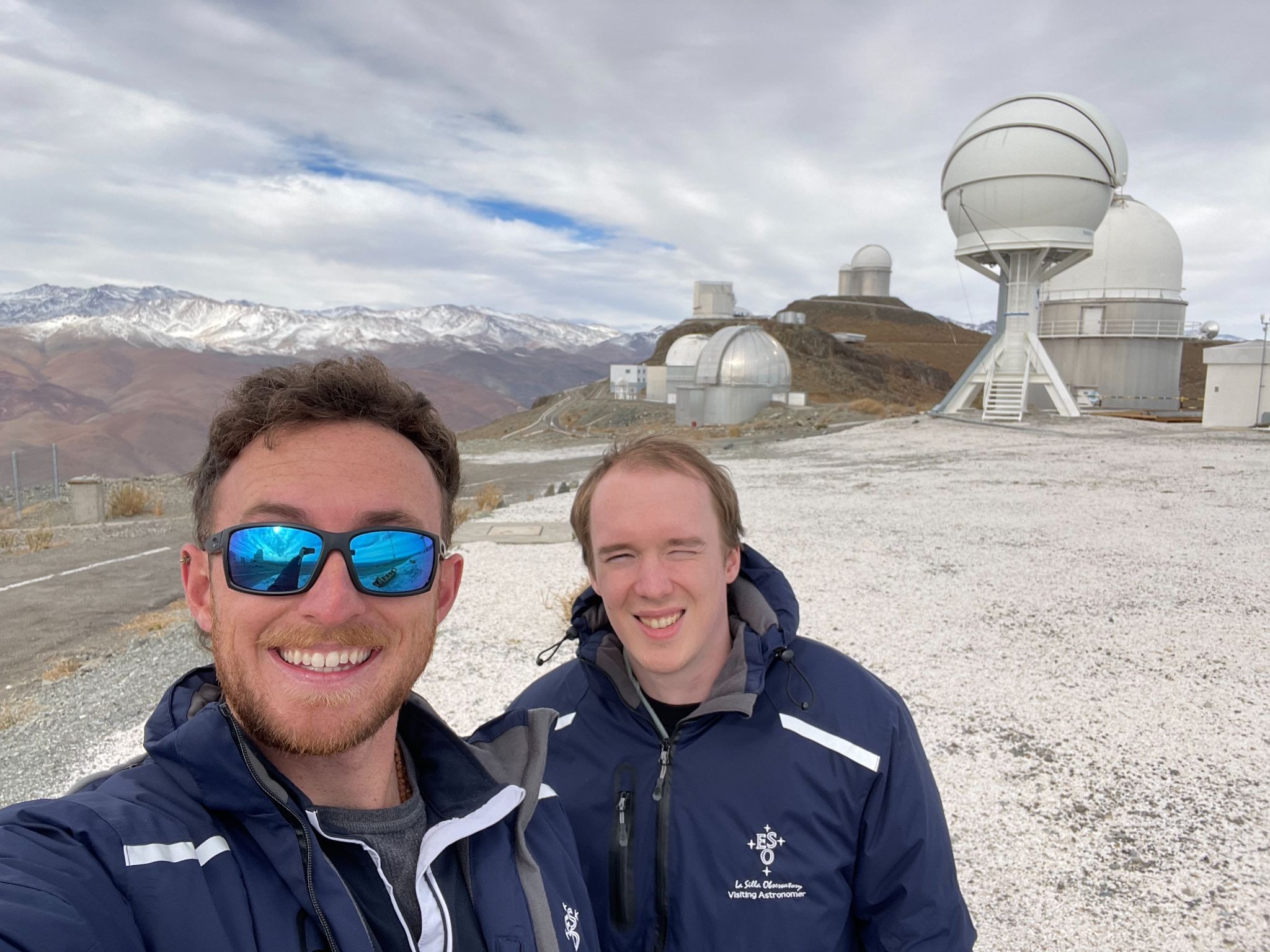
Congratulations Brian P. Murphy and Richard E. Cannon of the University of Edinburgh, recipients of the 2026 Schweickart Prize for their winning proposal, Untold Threats: A Worldwide Call to Defend New Frontiers. The proposal calls for expanding planetary defense beyond Earth's surface to protect humanity's growing presence throughout the Earth-Moon system.
We caught up with Brian and Richard to chat about their backgrounds, what inspired their winning proposal and why they think planetary defense needs to evolve alongside humanity’s future in space.
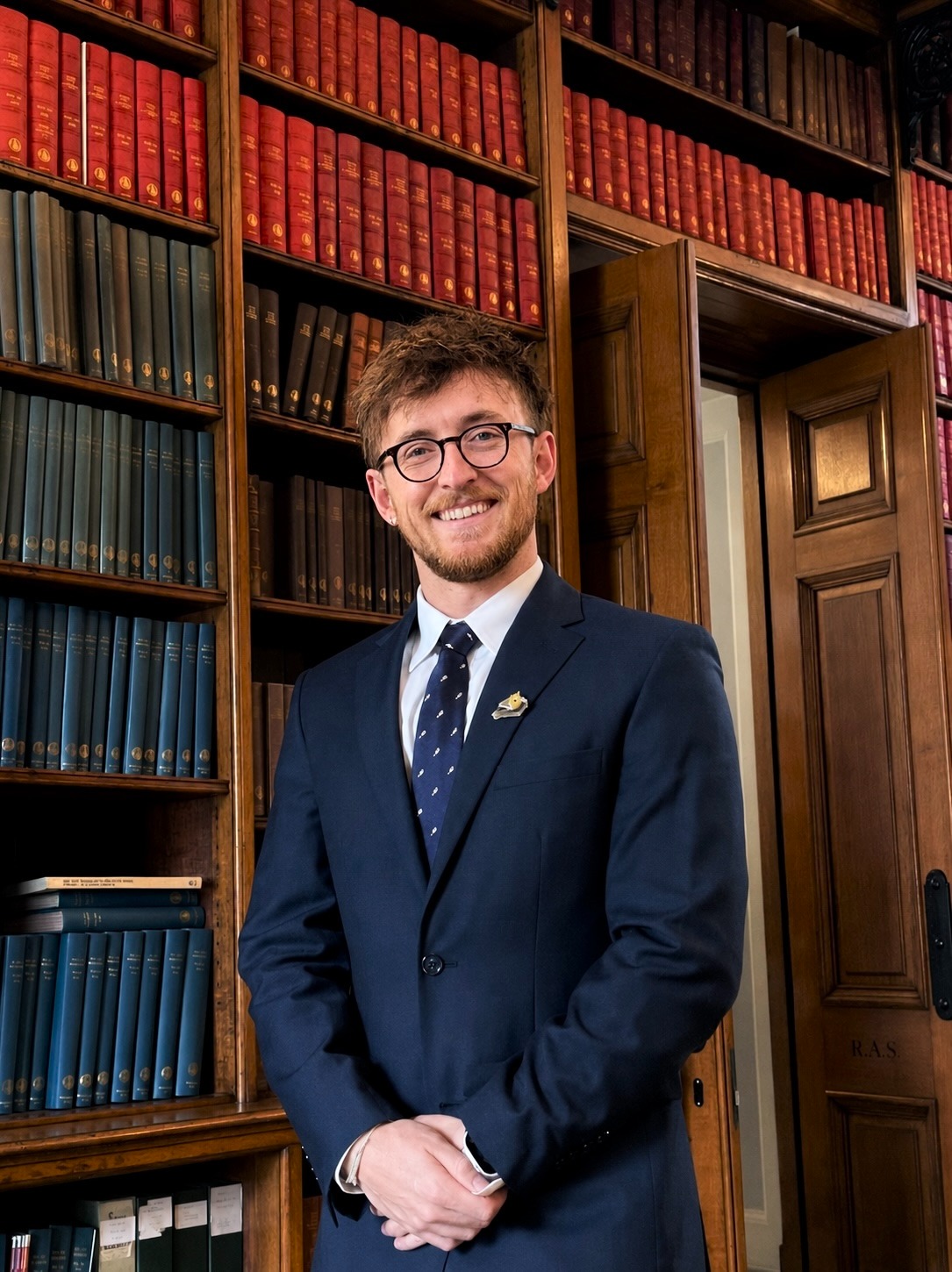
Dr. Brian P. Murphy
PhD Candidate, University of Edinburgh
Institute of Astronomy
Born and raised in rural Maryland near the Appalachian Mountains, Brian credits the dark night skies of his childhood with sparking his fascination with the universe. After earning his bachelor's degree in Planetary Science from Florida Tech and completing an internship with NASA's Planetary Science Division, he joined the University of Edinburgh, where he now studies comets and supports planetary defense missions, including NASA's DART and ESA's Hera.
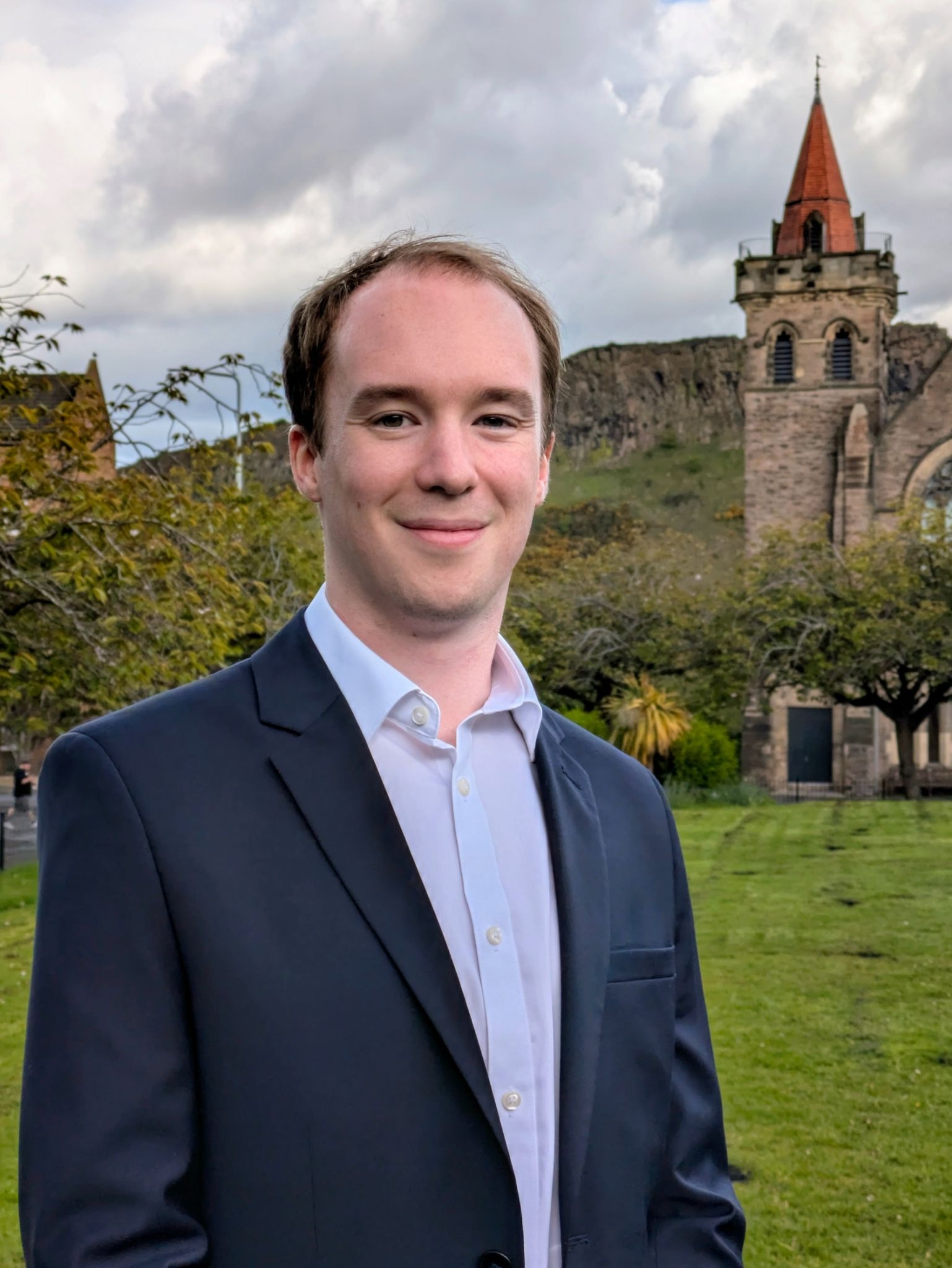
Richard E. Cannon
PhD Candidate, University of Edinburgh
Astronomy
Originally from England, Richard developed an interest in aerospace and astronomy in his early teens. After studying Physics with Astronomy at Cardiff University, he moved to Edinburgh to pursue his PhD on the morphology of near-Earth asteroids. Immersion in the University's work surrounding NASA's DART mission sparked his interest in planetary defense and the role these objects play in humanity's future.
Can you explain the main focus and objectives of your winning proposal?
Brian & Richard: Humanity has transformed from an Earth-bound society into one increasingly dependent on space. As we place more satellites in orbit and expand into cislunar space, we expose critical infrastructure to hazards that fall outside current planetary defense frameworks.
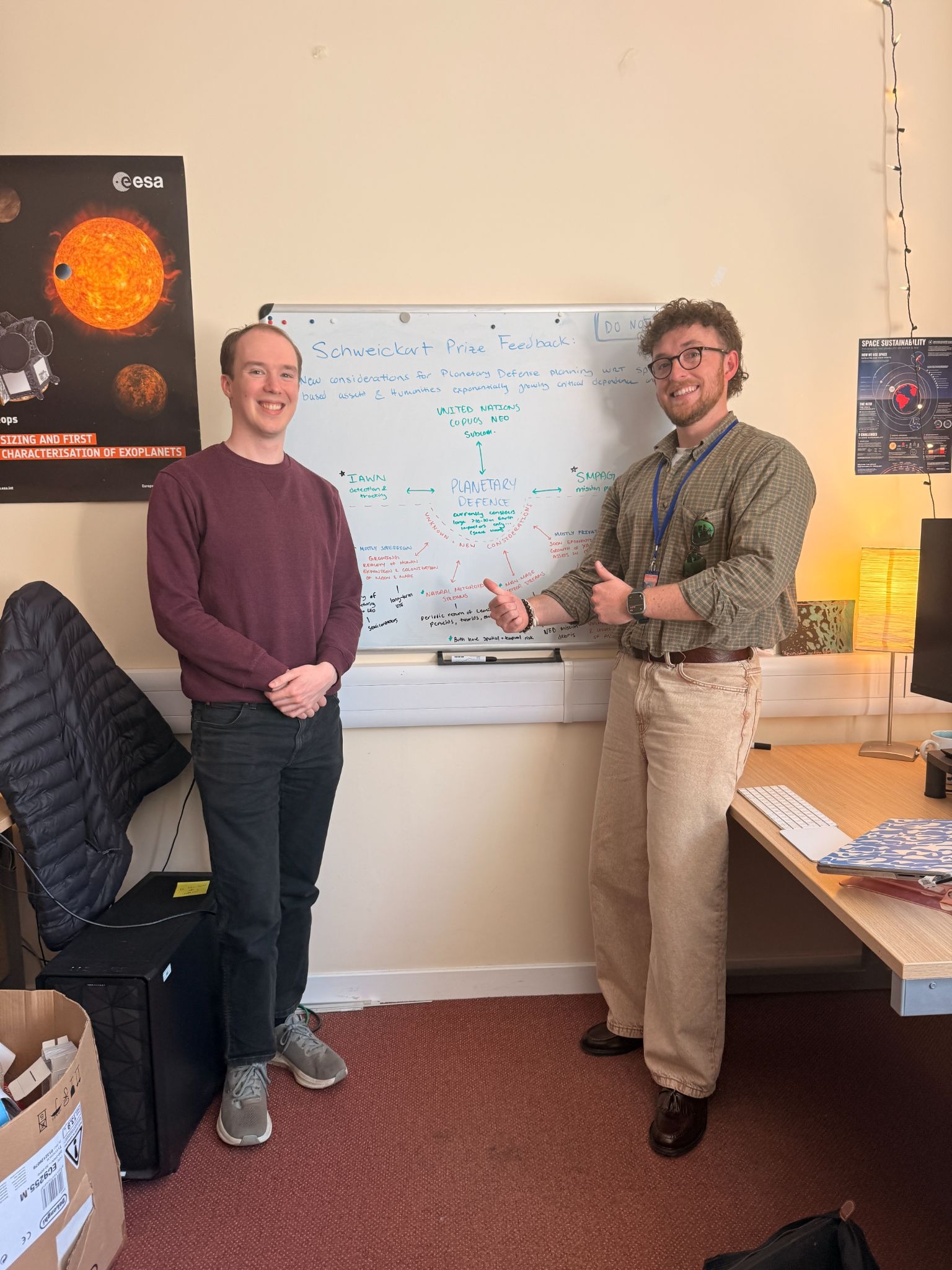
Our proposal calls for the creation of an International Commission on Space Infrastructure Resilience (ICSIR) to investigate these emerging risks and ultimately establish a new international body, WARDEN (Warning Network for Asset Resilience from Dust, Ejecta, and NEOs). WARDEN would complement existing organizations such as IAWN and SMPAG, helping coordinate the protection of humanity's assets throughout the Earth-Moon system.
To protect the world of tomorrow, we must take the necessary action today.
What were some of the biggest challenges your team faced while working on the proposal?
Brian & Richard: The biggest challenge was the interdisciplinary nature of the problem. We drew upon astronomy, economics, engineering, public policy, UN governance, and commercial space industry projections, all of which are evolving rapidly.
Through this work, we came away with an even stronger appreciation for international collaboration. No single expert or organization can solve these challenges alone.
Were there any recent developments that shaped your thinking?
Brian & Richard: One major driver was the rapid growth of AI and the emergence of plans for space-based data centers. We were astonished by the scale of some of these proposals—hundreds of thousands to millions of large satellites are being considered to support communications, AI, and power generation.
We were also surprised to realize that debris generated by successful asteroid deflection missions could itself create new meteoroid streams, introducing long-term hazards that deserve greater study.
How did you learn about the Schweickart Prize?
Brian: Staff at the University of Edinburgh encouraged me to apply because of my interest in planetary defense. Interestingly, the proposal itself began after I had a vivid dream about a meteoroid storm striking Earth. I started doing some back-of-the-envelope calculations and asked Richard to double-check my work. We both came to the same conclusion: the risk is real, and something needs to be done.
How do you plan to use the $10,000 prize?
Brian: We plan to invest part of the prize in organizing the first ICSIR meetings and presenting our ideas at conferences and gatherings with experts in planetary defense and space policy.
The Schweickart Prize is also helping us build the relationships and networks needed to turn these ideas into reality. We're incredibly grateful to the B612 Foundation and the University of Edinburgh for their support.
Do you have any advice for future students interested in following in your footsteps?
Brian: Find the intersection between what you're passionate about and what you can give back to the world.
There will be moments when the path feels difficult. Perseverance and tenacity will carry you through those times. And if you ever lose your way, return to the thing that first inspired you and let that spark guide you forward.
The Schweickart Prize celebrates not only bold ideas in planetary defense, but also the emerging leaders behind them. Brian and Richard's work reflects the kind of foresight, scientific rigor, and international collaboration that will be essential as humanity expands beyond Earth and into the new frontiers ahead.